A recipe can be written on paper.
A food tradition is harder to capture.
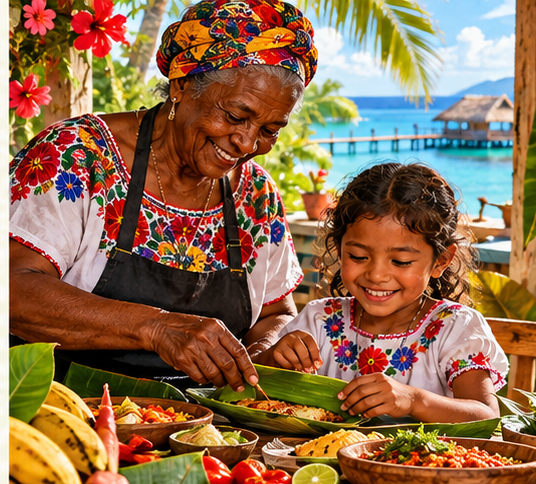
It can live in the way someone kneads dough, prepares a spice mixture, chooses ingredients from the land, cooks for a holiday, or teaches a child a dish that was taught to them by someone else.
In Belize, cultural workers and community members are trying to make sure those traditions are not lost.
The Belize Food Heritage Project is documenting the country’s foodways as part of Belize’s national inventory of intangible cultural heritage. In August 2026, participants in the Cayo District took part in a UNESCO-supported workshop focused on identifying, recording, and safeguarding local culinary traditions.
The project is not simply collecting recipes.
Participants are learning how to document the knowledge, practices, stories, and community traditions connected to food — the things that make a dish part of a culture rather than just a list of ingredients.
The work will contribute to a broader catalogue of Belize’s diverse food heritage, helping communities preserve traditions that UNESCO says face pressure from globalization, urbanization, and climate change.
The project also has a larger purpose.
Food can carry history between generations. It can preserve language, family memory, farming knowledge, celebrations, migration stories, and connections to particular places.
When those traditions disappear, something larger than a meal can disappear with them.
Belize’s effort is therefore partly about documentation — but it is also about keeping traditions alive by making sure communities remain the people telling their own stories.
The initiative is being carried out by Belize’s Institute for Social and Cultural Research, part of the National Institute of Culture and History, with support from UNESCO’s Intangible Cultural Heritage Fund.
The finished inventory will not freeze Belizean food culture in time.
Living culture changes.
The goal is to give communities a stronger way to remember what came before, celebrate what still exists, and pass that knowledge forward.
Because sometimes protecting history begins with something as ordinary — and as powerful — as teaching someone how to make dinner.